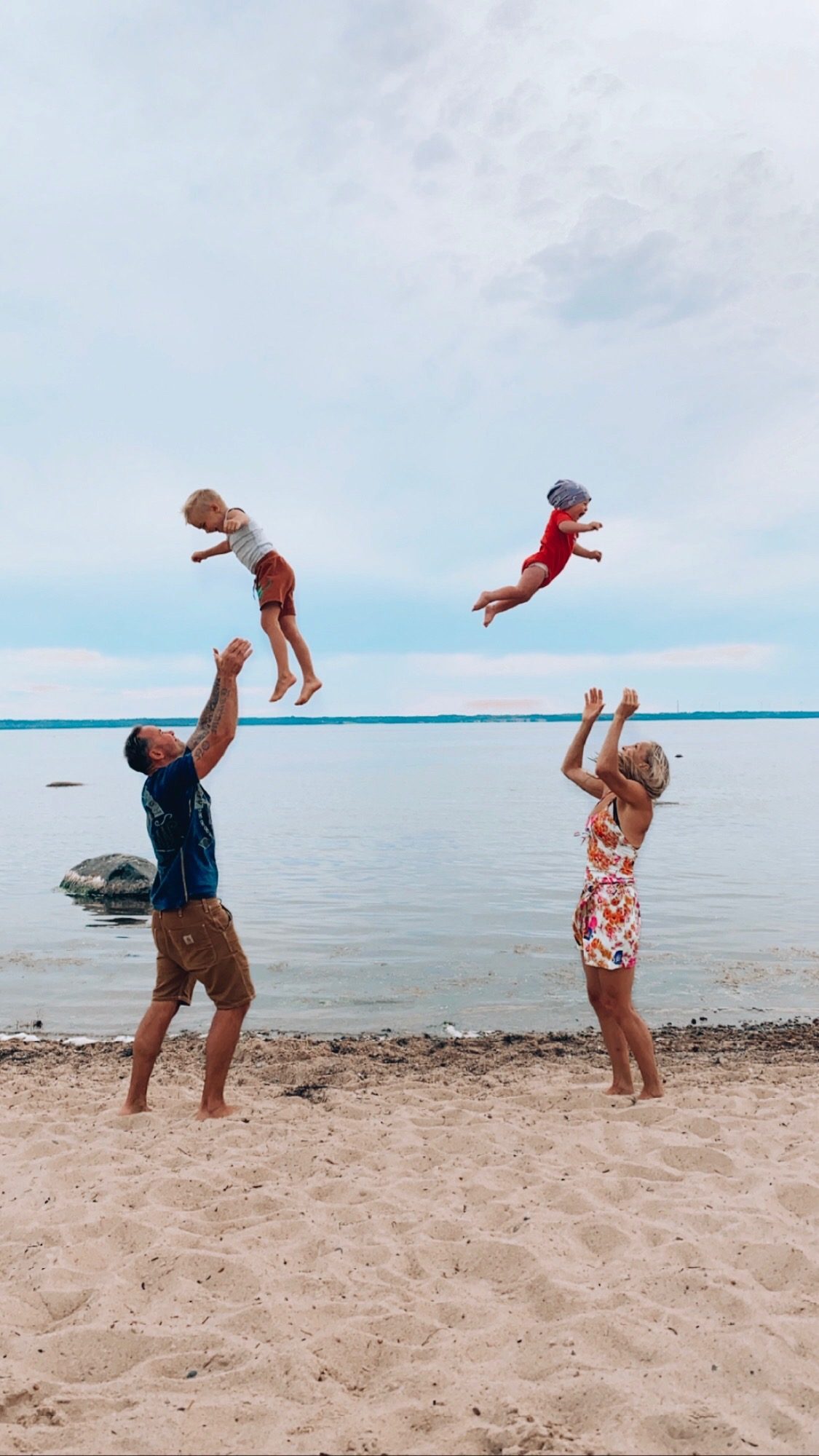
Every parent knows the pattern: week one is full of enthusiasm, week three is negotiation, week five the mat is gathering dust. Children are not lazy — they are honest. If moving stops feeling like play, they stop. Here is what four decades of coaching children has taught us about keeping the spark alive.
Make it play, never work
A three-year-old will not do "core strengthening", but will happily be a bear crossing a river, a rocket launching, or a pancake being flipped. The exercise is identical; the story makes the difference. Rename every move in your family's own language and let your child invent variations — ownership is motivation.
Keep sessions short and end on a high
Stop while your child still wants more. A ten-minute session that ends with laughter builds appetite for tomorrow; a forty-minute session that ends in tears builds resistance. The best moment to finish is right after a success — a good roll, a held balance — so the memory of training is the memory of winning.
Let them see progress
Children are motivated by the same thing adults are: visible progress. Keep it concrete — "last week you held it for two seconds, today three!" In our app families rate each exercise after doing it, and children love watching completed videos stack up. A simple paper chart with stickers works beautifully too.
Be the example, not the referee
The single strongest predictor of an active child is an active parent. Do the moves together, badly if necessary — a parent wobbling in a balance pose is the funniest and most encouraging thing a child can see. Correct less, laugh more; technique refines itself with repetition.
Same time, same place
Motivation loves ritual. A fixed slot — after breakfast on Saturdays, before bath on Tuesdays — removes the daily negotiation entirely. The mat comes out, the warm-up song plays, and the body already knows what happens next. Ten minutes of ritual beats an hour of persuasion.
When they refuse anyway
Some days the answer is simply no — and that is fine. Never force a session; force is how exercise becomes a chore. Leave the door open ("the mat is here if you change your mind"), join in yourself, and more often than not curiosity wins. Tomorrow is another day, and consistency is measured in months, not days.